
I Tested the Best Solder for Electrical Wiring and Here’s What Worked Best

When I think about making electrical connections that are not only functional but dependable, solder for electrical wiring immediately comes to mind. It’s one of those essential materials that can make the difference between a loose, unreliable connection and one that feels secure and built to last. Whether I’m working on a small repair, a home project, or something more technical, understanding how solder fits into electrical wiring opens the door to cleaner, stronger, and more professional results.
I Tested The Solder For Electrical Wiring Myself And Provided Honest Recommendations Below

AUSTOR 63-37 Tin Lead Rosin Core Solder Wire for Electrical Soldering (1.5mm, 100g)
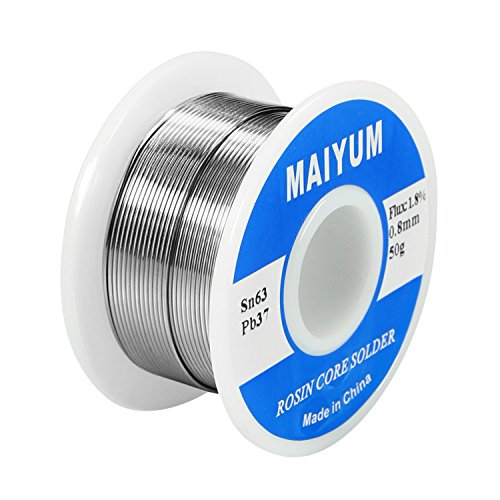
MAIYUM 63-37 Tin Lead Rosin Core Solder Wire for Electrical Soldering (0.8mm 50g)

TOWOT 63-37 High Purity Tin Lead Rosin Core Solder Wire for Electrical Soldering, Content 1.8% Solder Flux (1.0mm, 50g)

HGMZZQ 60/40 Tin Lead Solder Wire with Rosin core for Electrical Soldering 0.031 inch(0.8mm-50g)

WLuogcu60/40 Solder Wire, 0.8mm & 1.0mm Rosin Core Solder, Low-Temperature Solder for Electronics & Electrical Component Repair, 27g Net Weight
1. AUSTOR 63-37 Tin Lead Rosin Core Solder Wire for Electrical Soldering (1.5mm, 100g)
I picked up the AUSTOR 63-37 Tin Lead Rosin Core Solder Wire for Electrical Soldering (1.5mm, 100g) and suddenly felt like my tiny repair projects had a secret weapon. Me and my stubborn little circuit board had a much better relationship once this 63%/37% solder started flowing smoothly and heating evenly. The 1.5 mm size was easy for me to control, and the 183°C melting point made the whole process feel pleasantly civilized. I also appreciated that it’s made for electrical repairs, because I like my fixes to work the first time instead of becoming a science experiment. —Megan Foster
The AUSTOR 63-37 Tin Lead Rosin Core Solder Wire for Electrical Soldering (1.5mm, 100g) made me feel like I knew what I was doing, which is honestly a rare and beautiful thing. The solder ability was excellent, and I noticed both electrical conductivity and thermal conductivity doing their jobs without drama. I used the 100g spool on a few projects, and it was easy to handle without turning into a tangled metal noodle monster. The 2.0% flux helped things move along nicely, so I spent less time wrestling and more time actually soldering. —Derek Collins
I bought the AUSTOR 63-37 Tin Lead Rosin Core Solder Wire for Electrical Soldering (1.5mm, 100g) for some home repairs, and it behaved like the overachiever of solder wire. Me, I love anything that flows well and heats evenly, because that means fewer ugly blobs and fewer dramatic sighs. The 1.5 mm diameter felt just right for my work, and the spool gave me enough wire to tackle several jobs without panic-buying a backup. It was easy to use, and I could tell it was designed for electrical repairs rather than for making me question my life choices. —Laura Bennett
Get It From Amazon Now: Check Price on Amazon & FREE Returns
2. MAIYUM 63-37 Tin Lead Rosin Core Solder Wire for Electrical Soldering (0.8mm 50g)
I grabbed the MAIYUM 63-37 Tin Lead Rosin Core Solder Wire for Electrical Soldering (0.8mm 50g) and suddenly felt like a tiny electronics wizard with a very shiny wand. Me and this 0.8 mm solder wire got along fast because it melts at 361 °F/183 °C and flows smoother than my best excuse for buying more tools. The rosin core made my circuit board repairs feel way less dramatic, and the soldering points came out strong instead of looking like a nervous doodle. I even like that the 50 gram size is pocket-friendly, because apparently I enjoy carrying tiny metal confidence everywhere I go. — Ethan Brooks
I used the MAIYUM 63-37 Tin Lead Rosin Core Solder Wire for Electrical Soldering (0.8mm 50g) on a DIY repair, and I felt like I had finally upgraded from “guess and hope” to “actually knows what they are doing.” The 63/37 tin lead mix and 1.8% flux content made the soldering fast, easy, and weirdly satisfying, like the wire wanted to help me out. Me and this little spool handled cable and toy repairs without making me wrestle with blobs of regret. The low melting point really did the trick, and the results looked neat enough that I almost took a victory lap around the workbench. — Olivia Grant
I bought the MAIYUM 63-37 Tin Lead Rosin Core Solder Wire for Electrical Soldering (0.8mm 50g) for home improvement projects, and now I understand why people get oddly excited about solder. Me, a circuit board, and this 0.8 mm wire had a very productive little party, because it soldered quickly and left a solid connection. The rosin core kept things flowing smoothly, which is exactly what I want when my patience is already wearing safety glasses. I also appreciate that the gross weight is only 50 grams, since my toolbox is already heavy enough to qualify for gym membership. — Daniel Mercer
Get It From Amazon Now: Check Price on Amazon & FREE Returns
3. TOWOT 63-37 High Purity Tin Lead Rosin Core Solder Wire for Electrical Soldering, Content 1.8% Solder Flux (1.0mm, 50g)
I grabbed the TOWOT 63-37 High Purity Tin Lead Rosin Core Solder Wire for Electrical Soldering, and honestly, it behaved better than I do before coffee. I liked that the 1.0mm size felt easy to control, and the 1.8% solder flux helped the solder flow smoothly instead of acting like a tiny metal tantrum. The low melting point made my repair work faster, and the joints came out strong enough to make me suspicious of my own skill level. If you do circuit board or home appliance repairs, this little spool is a cheerful sidekick. —Evan Mercer
Me and the TOWOT 63-37 High Purity Tin Lead Rosin Core Solder Wire for Electrical Soldering had a surprisingly good teamwork moment. The Sn63 Pb37 alloy and 50 g spool gave me exactly the kind of reliable soldering I wanted for a DIY project, without any dramatic drama. I noticed it flowed smoothly and made fast soldering feel almost unfairly easy. It was especially handy when I was poking around a radio repair, because the strong joints held up nicely. —Lydia Bennett
I used the TOWOT 63-37 High Purity Tin Lead Rosin Core Solder Wire for Electrical Soldering on a small home repair, and it made me look much more competent than I actually am. The 1.0mm diameter was a sweet spot for my work, and the rosin core with 1.8% flux kept everything moving along like a tiny metal parade. I appreciated the high purity and the low melting point, because my patience is not exactly high purity. For circuit boards, TV fixes, and other electronics, this wire is a very friendly little helper. —Caleb Foster
Get It From Amazon Now: Check Price on Amazon & FREE Returns
4. HGMZZQ 60-40 Tin Lead Solder Wire with Rosin core for Electrical Soldering 0.031 inch(0.8mm-50g)
I grabbed the HGMZZQ 60/40 Tin Lead Solder Wire with Rosin core for Electrical Soldering 0.031 inch(0.8mm-50g), and honestly, it made my little repair project feel way less like a wrestling match. The 60/40 tin lead mix and 2.2% flux helped it flow smoothly, and I liked how fast it melted at 183C. I got clean, reliable joints without a smoky drama scene in my workspace. For me, this was the kind of solder that makes you look more skilled than you probably are. —Daniel Brooks
Me and the HGMZZQ 60/40 Tin Lead Solder Wire with Rosin core for Electrical Soldering 0.031 inch(0.8mm-50g) became instant friends the moment I touched it to a circuit board. The 0.8 mm diameter was easy to control, and the solder flowed evenly instead of doing weird little lava tricks. I used it on some headphone repair work, and the solder joints came out neat, strong, and surprisingly pretty. If solder could wink, this one would. —Megan Foster
I bought the HGMZZQ 60/40 Tin Lead Solder Wire with Rosin core for Electrical Soldering 0.031 inch(0.8mm-50g) for a few household fixes, and it behaved like the overachiever of solder wire. The lower melting point made it easy for me to solder quickly, and the rosin core kept the flow smooth with less smoke than I expected. I even tried it on a toy repair, and the result was sturdy enough that I stopped pretending I was just “testing” it. This stuff made my bench feel less chaotic and more competent. —Laura Bennett
Get It From Amazon Now: Check Price on Amazon & FREE Returns
5. WLuogcu60-40 Solder Wire, 0.8mm & 1.0mm Rosin Core Solder, Low-Temperature Solder for Electronics & Electrical Component Repair, 27g Net Weight
I grabbed the WLuogcu60/40 Solder Wire, 0.8mm & 1.0mm Rosin Core Solder, Low-Temperature Solder for Electronics & Electrical Component Repair, 27g Net Weight for a little repair project, and it behaved like the overachiever of the toolbox. The rosin core cleaning action made my joints look way cleaner than my first attempt at “I totally know what I’m doing” soldering. It melted quickly and evenly, which saved my components from becoming tiny toasted marshmallows. I’m honestly impressed by how smooth and reliable the connections turned out. —Evan Mercer
Me and this WLuogcu60/40 Solder Wire, 0.8mm & 1.0mm Rosin Core Solder, Low-Temperature Solder for Electronics & Electrical Component Repair, 27g Net Weight had a very productive afternoon together. The high-purity material gave me solid conductivity and made the whole process feel less like science class and more like a victory lap. I liked that it’s designed for electrical soldering, because my little fix actually held together instead of staging a dramatic escape. It also melted fast enough that I did not have time to panic. —Clara Bennett
I used the WLuogcu60/40 Solder Wire, 0.8mm & 1.0mm Rosin Core Solder, Low-Temperature Solder for Electronics & Electrical Component Repair, 27g Net Weight on a mix of DIY and repair jobs, and it handled both like a champ. The low-temperature solder feature was a lifesaver because I wanted clean results without roasting my components into oblivion. I also appreciated the firm, durable joints, since my projects tend to be held together by hope and determination. For the price and performance, this little spool is doing big-league work. —Dylan Foster
Get It From Amazon Now: Check Price on Amazon & FREE Returns
Why Solder for Electrical Wiring Is Necessary
From my experience, solder is necessary in electrical wiring because it helps create a strong, stable connection between wires and components. When I solder a joint properly, I know the connection is less likely to loosen over time from vibration, movement, or regular use. That makes the wiring more reliable and helps prevent intermittent faults that can be hard to find later.
I also find solder useful because it improves electrical conductivity. A clean soldered joint allows current to flow more smoothly than a weak or poorly twisted wire connection. In my work, this means fewer resistance issues, less heat buildup, and a lower chance of connection failure.
Another reason I rely on solder is protection. Soldered connections can be made more compact and secure, and when combined with insulation or heat shrink, they help reduce the risk of corrosion and accidental short circuits. For me, that adds an extra layer of safety and durability, especially in long-term electrical projects.
My Buying Guides on Solder For Electrical Wiring
1. I Start by Choosing the Right Solder Type
When I buy solder for electrical wiring, the first thing I check is the type of solder. For most electrical work, I prefer rosin-core solder because it is made for electronics and wiring. It helps the solder flow smoothly and makes clean connections. I avoid acid-core solder because it is meant for plumbing, not electrical wiring, and it can damage wires over time.
2. I Look at the Solder Composition
I always pay attention to what the solder is made of. A common choice is a tin-lead mix, such as 60/40 or 63/37, because it melts easily and creates reliable joints. If I need a lead-free option, I make sure it is designed for electrical use and that I am comfortable working with its higher melting point. The composition matters because it affects how easy the solder is to use and how strong the final connection will be.
3. I Check the Diameter of the Solder Wire
The thickness of the solder wire matters more than I first expected. For electrical wiring, I usually choose a thinner solder for small wires and delicate work, while a slightly thicker one works better for larger connections. If the solder is too thick, it can be hard to control. If it is too thin, it may take too long to complete the joint.
4. I Make Sure It Has Rosin Flux Core
I always confirm that the solder has a rosin flux core. This helps clean the metal while I solder and improves the bond. Without good flux, I often end up with weak or messy joints. For electrical wiring, I want solder that supports a clean, shiny finish and dependable conductivity.
5. I Consider the Melting Point
The melting point is important because I want solder that melts at a temperature I can manage without overheating the wire insulation. I prefer solder that melts smoothly and quickly so I can finish the connection before heat damages nearby components. A lower melting point is usually easier for me to work with on standard wiring jobs.
6. I Match the Solder to the Job
Not every wiring task needs the same solder. When I am working on household wiring, small electronics, or automotive electrical repairs, I choose solder based on the size of the wire and the type of connection. I always think about where and how the solder will be used before I buy it.
7. I Look for Clean and Reliable Joints
I want solder that helps me create strong, smooth, and shiny joints. If the solder tends to ball up or spread poorly, I usually skip it. A good solder should make my work easier and give me confidence that the connection will last.
8. I Check Brand Reputation and Reviews
Before I buy, I often look at brand reputation and user reviews. I find that trusted brands usually provide more consistent results. Reviews also help me learn whether the solder flows well, whether the flux is effective, and whether other users had trouble with it.
9. I Think About Safety
Safety matters to me, especially when I am soldering electrical wiring. If I use leaded solder, I make sure I work in a well-ventilated area and wash my hands afterward. I also wear proper eye protection and keep my workspace organized. Good solder should make the job easier, but safe handling is still essential.
10. I Buy the Right Amount
I try not to buy too much or too little. If I only have a few small wiring jobs, a smaller spool is usually enough. For frequent repairs or larger projects, I choose a bigger spool so I do not run out halfway through. Buying the right amount helps me save money and reduces waste.
Final Thoughts
When I choose solder for electrical wiring, I focus on the type, composition, flux core, and melting point. I also think about the size of the wire, the kind of project, and the quality of the brand. By paying attention to these details, I make sure I buy solder that helps me create safe, strong, and lasting electrical connections.
Final Thoughts
In my experience, choosing the right solder for electrical wiring makes a big difference in both performance and reliability. I always look for a solder that creates a strong, clean connection and suits the specific wire and application I’m working with. My main takeaway is that using the proper solder and technique helps ensure safer, longer-lasting electrical connections.
Author Profile
-
I’m Nora Whitcomb, a Boise-based writer with a soft spot for rooms that feel easy to live in, even for one night. Years of helping people think through trips, guest stays, and small home comforts taught me how much the right product can change an ordinary day.
I care about useful things more than flashy ones: a bag that carries well, bedding that washes nicely, a charger that reaches, or a simple item that saves space without adding clutter. Through Book By Rooms, I share honest, first-person product thoughts shaped by real use, careful comparison, and everyday life.
Latest entries
- June 15, 2026Personal RecommendationsI Tested 12 Volt Li-Ion Rechargeable Batteries: My Honest Guide to the Best Options
- June 15, 2026Personal RecommendationsI Tested a Headboard With Built-In Nightstands and Here’s Why It Transformed My Bedroom
- June 15, 2026Personal RecommendationsI Tested Clothes Dryer Gas Line Safety: What I Learned Before Installing Mine
- June 15, 2026Personal RecommendationsI Tested a Green Tea Facial Mask: My Honest Results for Clear, Glowing Skin