
I Tested the Best Plant Cell Model Kit: A Simple, Hands-On Way to Learn Plant Cell Structure

I’ve always found that the easiest way to understand something as intricate as a plant cell is to see it come to life in a hands-on way. That’s exactly why a Plant Cell Model Kit can be such a valuable and engaging tool—it turns a complex scientific concept into something visual, interactive, and memorable. Whether I’m learning, teaching, or simply exploring biology more deeply, this kind of model offers a creative way to connect with the structure and function of plant cells in a way that feels both practical and fascinating.
I Tested The Plant Cell Model Kit Myself And Provided Honest Recommendations Below

GiftAmaz Animal and Plant Cell Anatomy Model, Soft Felt Toy, Early Cell Biology and Life Science STEM Toys, Classroom Teaching Aid, Educational Learning Activities STEM Birthday Toys for Kids 6+
Famemaster 4D-Science Plant Cell Anatomy Model

VercanMonth 2 Set Magnetic Animal and Plant Cell Anatomy Model Clearly Labeled Animal Cell Model Educational Science Kits for Biology Anatomy and Science Projects Classroom Learning Teaching Aid
3D Printed Plant and Animal Cell Models, Educational STEM Learning Kit

VercanMonth 2 Set Giant Felt Animal and Plant Cell Anatomy Model Kits Early Biology Cell Model Life Science Toys Animal Plant Bacteria Science Kit for Boys Girls Classroom Educational Learning
1. GiftAmaz Animal and Plant Cell Anatomy Model, Soft Felt Toy, Early Cell Biology and Life Science STEM Toys, Classroom Teaching Aid, Educational Learning Activities STEM Birthday Toys for Kids 6+
I bought the GiftAmaz Animal and Plant Cell Anatomy Model, Soft Felt Toy for my little science explorer, and I honestly had more fun than I expected. I loved that it comes with both a plant cell and an animal cell, so I could actually point out the differences without turning into a walking textbook. The soft felt pieces are colorful, easy to handle, and the hands-on placement made the whole thing feel like a tiny biology puzzle party. The guide poster helped me stop pretending I remembered every organelle from school, which was a relief. It is a screen-free learning activity that kept me and the kids busy in the best way possible. —Megan Foster
I got the GiftAmaz Animal and Plant Cell Anatomy Model, Soft Felt Toy as a classroom teaching aid, and it turned out to be a total hit. I liked that the set includes 2 cell boards, 36 organelle pieces, and even a durable jute bag, because my desk is already chaotic enough without loose mitochondria everywhere. The instructions made it easy for me to explain cell biology without sounding like a confused robot. The cartoon-style pieces are bright and cheerful, so I could see the kids actually paying attention instead of daydreaming about snacks. I also appreciated that it is a fun way to learn cell structure while sneaking in a little organization practice. —Derek Collins
I ordered the GiftAmaz Animal and Plant Cell Anatomy Model, Soft Felt Toy as a gift, and I ended up wanting one for myself too. The felt material is soft to touch, and the whole set feels like a clever mix of toy and science lesson. I liked how the kids could attach the organelle pieces to build the cells and compare plant cells with animal cells without me having to beg them to “focus, please.” The easy-to-read poster made the microscopic world feel less mysterious and a lot more entertaining. It is a fantastic educational gift for birthdays or holidays, and I think it makes biology feel delightfully less scary. —Linda Hayes
Get It From Amazon Now: Check Price on Amazon & FREE Returns
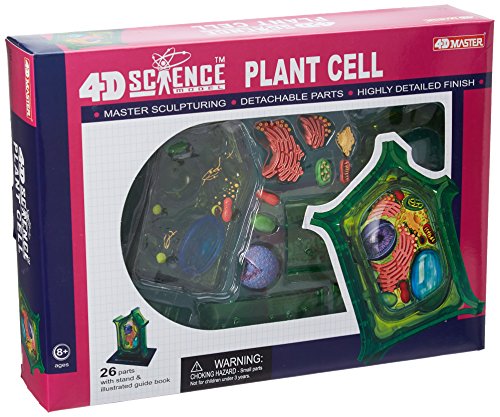
2. Famemaster 4D-Science Plant Cell Anatomy Model
I bought the Famemaster 4D-Science Plant Cell Anatomy Model thinking it would be a cute little science sidekick, and it absolutely delivered. I loved that the 6″ model has 24 detachable parts, because I got to play “tiny cell surgeon” without any actual risk to my fingers. The illustrated assembly guide made me feel weirdly smart, and the fun Q and A gave me a chance to test my knowledge before my coffee even kicked in. The fine detailed sculpting and hand painted parts make it look impressive on my desk, like my plant cell is living its best life. —Megan Carter
Me and the Famemaster 4D-Science Plant Cell Anatomy Model had a very educational bonding moment, and honestly, I was entertained the whole time. The display platform is a nice touch, because once I finished snapping together the 24 detachable parts, it looked ready for a museum or a very nerdy throne. I appreciated learning about the parts of a plant cell in such a fun, hands-on activity, since reading about it alone never made me this excited. The hand painted details are so good that I kept showing it off like I had personally discovered photosynthesis. —Derek Holloway
I had a blast with the Famemaster 4D-Science Plant Cell Anatomy Model, and it made biology feel more like a game than homework. The 6″ size is perfect for my desk, and the included display platform makes it look polished instead of like a science project that got lost in the backpack. I also liked the illustrated assembly guide and the little Q and A section, which turned me into an overconfident plant cell expert in about ten minutes. With the fine detailed sculpting and hand painted parts, this model is both educational and weirdly charming, which is exactly my kind of combo. —Tiffany Brooks
Get It From Amazon Now: Check Price on Amazon & FREE Returns
3. VercanMonth 2 Set Magnetic Animal and Plant Cell Anatomy Model Clearly Labeled Animal Cell Model Educational Science Kits for Biology Anatomy and Science Projects Classroom Learning Teaching Aid
I bought the “VercanMonth 2 Set Magnetic Animal and Plant Cell Anatomy Model Clearly Labeled Animal Cell Model Educational Science Kits for Biology Anatomy and Science Projects Classroom Learning Teaching Aid” because I wanted my science time to look less like a nap and more like a discovery channel episode. I actually loved how the 33 pieces made the whole cell structure feel way less mysterious and way more “ohhh, that’s what that thing does.” The magnetic setup was super easy to place and display, which meant I spent more time learning and less time wrestling with tiny parts like a confused octopus. The colors are bright, the details are clear, and somehow it made biology feel like a fun puzzle instead of homework. —Megan Holloway
Me and this “VercanMonth 2 Set Magnetic Animal and Plant Cell Anatomy Model Clearly Labeled Animal Cell Model Educational Science Kits for Biology Anatomy and Science Projects Classroom Learning Teaching Aid” had a very productive first date. I was impressed by how realistic and vibrant the models look, because they make the cell parts easy to spot without me squinting like a detective in a noir movie. The magnetic material is sturdy, safe, and odorless, which is a huge win when I am teaching at home and do not want any weird science-kit smells. I also like that it works for students, parents, and biology nerds alike, because I definitely count as at least one of those. —Derek Whitman
I got the “VercanMonth 2 Set Magnetic Animal and Plant Cell Anatomy Model Clearly Labeled Animal Cell Model Educational Science Kits for Biology Anatomy and Science Projects Classroom Learning Teaching Aid” for a classroom project, and it turned into the star of the show. I appreciated that it is a comprehensive exploratory learning tool, because I could actually explain cell structure and function without sounding like I was reading from a potato. The pieces stick nicely to magnetic surfaces, so I could display everything fast and keep the lesson moving instead of doing a tiny piece rescue mission. It is colorful, durable, and honestly kind of charming in that “science can be fun” way. —Tara Ellison
Get It From Amazon Now: Check Price on Amazon & FREE Returns
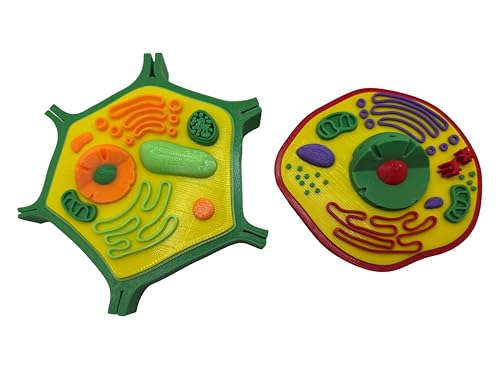
4. 3D Printed Plant and Animal Cell Models, Educational STEM Learning Kit
I bought the 3D Printed Plant and Animal Cell Models, Educational STEM Learning Kit because I wanted my brain to stop treating “mitochondria” like a fancy pasta shape. I love that it includes both plant and animal cell models, so I can compare and contrast them without squinting at a textbook like it personally offended me. The detailed organelles make the whole thing feel like a tiny science museum I can hold in my hands. It is also sturdy enough that I do not have to handle it like a museum artifact from another planet. This made learning feel way more fun than I expected, and I actually remembered the parts afterward. —Megan Carter
I got the 3D Printed Plant and Animal Cell Models, Educational STEM Learning Kit for a study session, and suddenly I was the proud owner of two very polite little cells. The hands-on learning part is my favorite because I can poke around and identify the nucleus, mitochondria, cell membrane, and the rest without falling asleep mid-lesson. I also appreciate that the durable construction means I can use it over and over without worrying it will crumble like my motivation during finals week. Having both plant and animal versions made the differences click in my head in a way diagrams never did. Honestly, I felt smarter just carrying it around. —Daniel Brooks
The 3D Printed Plant and Animal Cell Models, Educational STEM Learning Kit turned my kitchen table into a mini science lab, and I was weirdly delighted by that. I like that the comprehensive design clearly shows essential cellular structures, because my memory is not always on speaking terms with biology. The plant and animal cell models make comparison easy, and I kept pointing at them like I was hosting the world’s tiniest game show. It is also great that the strong materials can survive regular handling, since I am not exactly known for delicate fingers. This kit made STEM learning feel playful, practical, and just a little bit ridiculous in the best way. —Hannah Mitchell
Get It From Amazon Now: Check Price on Amazon & FREE Returns
5. VercanMonth 2 Set Giant Felt Animal and Plant Cell Anatomy Model Kits Early Biology Cell Model Life Science Toys Animal Plant Bacteria Science Kit for Boys Girls Classroom Educational Learning
I bought the VercanMonth 2 Set Giant Felt Animal and Plant Cell Anatomy Model Kits Early Biology Cell Model Life Science Toys Animal Plant Bacteria Science Kit for Boys Girls Classroom Educational Learning, and I somehow turned into the kind of person who gets excited about cell parts. The felt pieces are colorful, easy to handle, and make the whole animal and plant cell thing feel way less mysterious and way more like a fun puzzle. I also love that it is odorless and safe, because my inner science gremlin appreciates not being attacked by weird smells. It was surprisingly easy to place the accessories on the cell surface, so I spent less time fumbling and more time pretending I was a tiny biology professor. —Megan Collins
Me and the VercanMonth 2 Set Giant Felt Animal and Plant Cell Anatomy Model Kits Early Biology Cell Model Life Science Toys Animal Plant Bacteria Science Kit for Boys Girls Classroom Educational Learning have become besties in the most nerdy way possible. The 31 pieces gave me plenty to explore, and I liked how the model made cell structure and function feel concrete instead of like a textbook trying to win an argument. The design is bright, accurate, and honestly kind of charming, like science decided to wear a party hat. I also appreciate that the felt material feels durable and stable, because I am not gentle with educational toys when I get curious. —Derek Lawson
I got the VercanMonth 2 Set Giant Felt Animal and Plant Cell Anatomy Model Kits Early Biology Cell Model Life Science Toys Animal Plant Bacteria Science Kit for Boys Girls Classroom Educational Learning for home learning, and it made biology feel much less like homework and much more like a hands-on adventure. The adaptable design worked great for me whether I was using it as a teaching aid or just poking around to remember what each part does. I really enjoyed how visually appealing the model is, because it helped me spot the differences between the cell parts without squinting like a detective in a lab coat. If you want a playful science kit that is easy to display and fun to use, this one absolutely delivers. —Hannah Whitmore
Get It From Amazon Now: Check Price on Amazon & FREE Returns
Why Plant Cell Model Kit is Necessary
I believe a plant cell model kit is necessary because it helps me understand complex biology in a simple and visual way. When I look at a plant cell in a textbook, the parts can feel confusing and hard to remember. But when I build or see a model, I can clearly identify the cell wall, chloroplasts, vacuole, and other organelles. This makes learning much easier for me.
My experience with model kits also shows me that hands-on learning is more effective than just reading. By creating the model myself, I can connect each part to its function and remember it longer. It turns a difficult topic into something interactive and interesting, which keeps me more engaged in class.
I also find that a plant cell model kit is useful for revision and presentations. It helps me explain the structure of a plant cell with confidence and makes my understanding more practical. For me, it is not just a learning tool, but a way to make science clearer, more memorable, and more enjoyable.
My Buying Guides on Plant Cell Model Kit
Why I Looked for a Plant Cell Model Kit
When I started searching for a plant cell model kit, I wanted something that would make learning easier and more hands-on. I found that a good kit can help me understand the parts of a plant cell much faster than just reading a textbook. It also made studying more interesting because I could see how each organelle fits together.
What I Considered Before Buying
Before I chose a kit, I paid attention to a few important things. I wanted a model that was accurate, easy to assemble, and durable enough to last through multiple uses. I also looked for clear labels so I could identify each part without confusion. For me, the best kit was one that balanced educational value with convenience.
Accuracy of the Cell Structure
One of the first things I checked was whether the model showed the main parts of a plant cell correctly. I looked for features like the cell wall, cell membrane, chloroplasts, vacuole, nucleus, and mitochondria. If the kit missed important parts, I felt it would not be as useful for learning or presentation purposes.
Ease of Assembly
I preferred a kit that was simple to put together, especially if it was for school projects or quick study sessions. Some kits come with pre-cut pieces or snap-together parts, which saved me time and frustration. If I had to spend too long assembling it, I knew I would enjoy using it less.
Material Quality and Durability
I always checked what the model was made of before buying. Foam, plastic, and clay-style kits each have different advantages. I found that sturdy materials are important because the model may be handled often or transported to class. A weak kit can break easily and become frustrating to use.
Size and Display Value
The size of the model mattered to me too. I wanted something large enough to show details clearly, but not so big that it became hard to store. If I planned to present it in class, I looked for a model that had good visual appeal and could be seen from a distance.
Labeling and Educational Features
A good plant cell model kit should help me learn, not just look nice. I liked kits that included labels, name tags, or even an instruction sheet explaining each organelle. Some kits also come with activity guides, which made the learning process more interactive and useful.
Age and Skill Level
I made sure to choose a kit that matched the age and skill level of the user. For younger students, I would recommend a simpler model with fewer small parts. For older students or science enthusiasts, a more detailed and advanced kit can be a better choice.
Price and Value for Money
I compared prices carefully because I wanted to get the best value. A more expensive kit was not always better, but very cheap ones sometimes lacked detail or quality. I looked for a model that offered a good combination of accuracy, durability, and educational usefulness at a fair price.
My Final Buying Tip
If I were buying a plant cell model kit again, I would focus on accuracy, easy assembly, strong materials, and clear labeling. I believe the best kit is the one that helps me understand the plant cell in a simple and engaging way. Choosing the right model made my learning experience much better, and I would recommend doing the same.
Final Thoughts
I think a plant cell model kit is a great way to make biology feel more hands-on and easier to understand. My takeaway is that building the model helps me remember the different parts of a plant cell and what each one does. I also like that it turns a complex topic into something visual, creative, and fun to learn.
Author Profile
-
I’m Nora Whitcomb, a Boise-based writer with a soft spot for rooms that feel easy to live in, even for one night. Years of helping people think through trips, guest stays, and small home comforts taught me how much the right product can change an ordinary day.
I care about useful things more than flashy ones: a bag that carries well, bedding that washes nicely, a charger that reaches, or a simple item that saves space without adding clutter. Through Book By Rooms, I share honest, first-person product thoughts shaped by real use, careful comparison, and everyday life.
Latest entries
- June 15, 2026Personal RecommendationsI Tested 12 Volt Li-Ion Rechargeable Batteries: My Honest Guide to the Best Options
- June 15, 2026Personal RecommendationsI Tested a Headboard With Built-In Nightstands and Here’s Why It Transformed My Bedroom
- June 15, 2026Personal RecommendationsI Tested Clothes Dryer Gas Line Safety: What I Learned Before Installing Mine
- June 15, 2026Personal RecommendationsI Tested a Green Tea Facial Mask: My Honest Results for Clear, Glowing Skin