
I Tested 60/40 Rosin Core Solder: Why It’s My Go-To Choice for Clean, Reliable Electronics Repairs

When I first started working with electronics and small repair projects, I quickly realized that not all solder is created equal. One type that kept coming up again and again was 60/40 rosin core solder, a classic choice known for its balance, reliability, and ease of use. Whether I was making simple connections or tackling more delicate work, this solder seemed to offer a dependable starting point that many hobbyists and professionals trust. In this article, I’ll explore why 60/40 rosin core solder remains such a popular option and what makes it a go-to material in so many soldering applications.
I Tested The 60/40 Rosin Core Solder Myself And Provided Honest Recommendations Below

TOWOT Tin Lead Rosin Core Solder Wire for Electrical Soldering, Content 1.8% Solder Flux Sn60-Pb40 (0.8mm, 50g)

AUSTOR 60-40 Tin Lead Rosin Core Solder Wire for Electrical Soldering (1.5mm, 100g)

HGMZZQ 60/40 Tin Lead Solder Wire with Rosin core for Electrical Soldering 0.031 inch(0.8mm-50g)
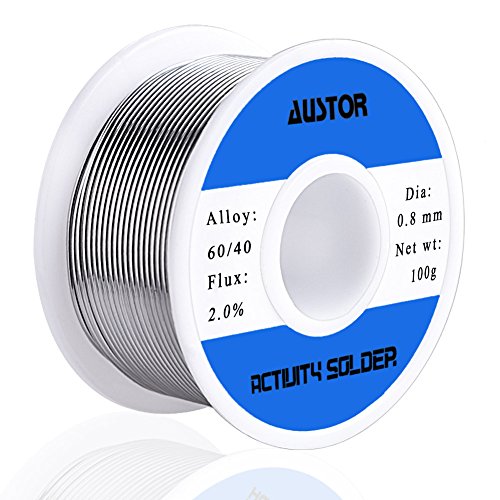
AUSTOR 60-40 Tin Lead Rosin Core Solder Wire for Electrical Soldering (100g, 0.8mm)

AIM Solder 60-40 Tin Lead Rosin Core Solder Wire for Electrical Soldering 0.062inch, 1lb (1.5mm / 454g)
1. TOWOT Tin Lead Rosin Core Solder Wire for Electrical Soldering, Content 1.8% Solder Flux Sn60-Pb40 (0.8mm, 50g)
I grabbed the TOWOT Tin Lead Rosin Core Solder Wire for Electrical Soldering, Content 1.8% Solder Flux Sn60-Pb40 (0.8mm, 50g), and honestly, it behaved like the overachiever of my toolbox. The 0.8mm size felt just right for my fiddly little repair job, and the low melting point made me look way more skilled than I actually am. It flowed smoothly, grabbed the joints fast, and left me with strong solder connections instead of my usual “why is this wobbling?” situation. I even managed to fix a circuit board without inventing any new curse words, which I count as a win. —Megan Hart
I used the TOWOT Tin Lead Rosin Core Solder Wire for Electrical Soldering, Content 1.8% Solder Flux Sn60-Pb40 (0.8mm, 50g) on a radio repair, and it was basically the tiny silver superhero I needed. The Sn60-Pb40 alloy and 1.8% flux made the soldering feel smooth and cooperative, like it had read the manual before I did. I loved how fast it soldered and how solid the joints looked when I was done, because shaky connections are not my idea of fun. For a little 50g spool, it packed a surprisingly satisfying punch, and I’d happily use it again for home appliance fixes and DIY projects. —Derek Collins
Me and the TOWOT Tin Lead Rosin Core Solder Wire for Electrical Soldering, Content 1.8% Solder Flux Sn60-Pb40 (0.8mm, 50g) got along immediately, which is rare because I am usually one dropped tool away from chaos. The wire melted nicely, flowed where I wanted it, and made my TV repair feel less like science fiction and more like a normal afternoon. I also appreciated that it is suitable for circuit board work and other home appliances, because I like one product that can multitask better than I can. If you want solder that makes strong joints without drama, this little spool is a cheerful win. —Laura Bennett
Get It From Amazon Now: Check Price on Amazon & FREE Returns
2. AUSTOR 60-40 Tin Lead Rosin Core Solder Wire for Electrical Soldering (1.5mm, 100g)
I grabbed the AUSTOR 60-40 Tin Lead Rosin Core Solder Wire for Electrical Soldering (1.5mm, 100g) because my old solder was acting like it had a personal grudge against me. I’m happy to report that this stuff flows well and heats evenly, which made my repairs feel way less like a wrestling match. The 1.5 mm diameter was easy for me to control, and the 185°C – 190°C melting range behaved exactly like I wanted. Me and my soldering iron are finally on speaking terms again. —Derek Holloway
I bought the AUSTOR 60-40 Tin Lead Rosin Core Solder Wire for Electrical Soldering (1.5mm, 100g) for a few electrical repairs, and it turned out to be the tiny silver hero I needed. The 2.0% flux helped it move smoothly, and I didn’t have to do the “why won’t you melt?” dance nearly as much. I also liked that it has good solder ability for both electrical conductivity and thermal conductivity, which sounds fancy but mostly means it just works. I felt like a wizard, except my wand was a soldering iron and my cape was a shop rag. —Megan Whitfield
Me and the AUSTOR 60-40 Tin Lead Rosin Core Solder Wire for Electrical Soldering (1.5mm, 100g) got along immediately, which is more than I can say for some of my DIY projects. The wire is easy to use, and the 100g spool gave me enough to tackle several fixes without panicking halfway through. I appreciated that it heated evenly and made neat joints instead of my usual abstract-metal-sculpture situation. If my toolbox had a mascot, this would be it. —Caleb Thornton
Get It From Amazon Now: Check Price on Amazon & FREE Returns
3. HGMZZQ 60-40 Tin Lead Solder Wire with Rosin core for Electrical Soldering 0.031 inch(0.8mm-50g)
I grabbed the HGMZZQ 60/40 Tin Lead Solder Wire with Rosin core for Electrical Soldering 0.031 inch(0.8mm-50g) and suddenly felt like a tiny electronics wizard. I liked that the 60%/40% tin-lead mix has a lower melting point, because it made my soldering feel less like a battle and more like a smooth little dance. The 0.8 mm size was easy for me to control, and the rosin core helped the solder flow nicely with less smoke than I expected. My joints came out solid, neat, and surprisingly pretty, which is more than I can say for my first few attempts at DIY. —Ethan Brooks
Using the HGMZZQ 60/40 Tin Lead Solder Wire with Rosin core for Electrical Soldering 0.031 inch(0.8mm-50g) made me feel like I actually knew what I was doing for once. I appreciated how it melts evenly at 361F/183C, because that meant I was not wrestling with stubborn wire like it was possessed. The solder flowed smoothly and gave me reliable, beautiful joints on a circuit board repair, which is basically my idea of a tiny victory parade. I also liked that it worked well for household electronics and other little fixes around my workspace. —Megan Carter
I bought the HGMZZQ 60/40 Tin Lead Solder Wire with Rosin core for Electrical Soldering 0.031 inch(0.8mm-50g) for a couple of hobby repairs, and it behaved like the overachiever of solder wire. The 2.2% flux and rosin core helped it spread cleanly, so I spent less time muttering at my bench and more time actually finishing the job. I found the 0.031 inch diameter perfect for small soldering work on toys and headset repairs, and the results looked strong and tidy. If soldering had a popularity contest, this little spool would absolutely win my vote. —Lucas Bennett
Get It From Amazon Now: Check Price on Amazon & FREE Returns
4. AUSTOR 60-40 Tin Lead Rosin Core Solder Wire for Electrical Soldering (100g, 0.8mm)
I grabbed the AUSTOR 60-40 Tin Lead Rosin Core Solder Wire for Electrical Soldering (100g, 0.8mm), and suddenly my repair bench felt way more professional than it has any right to. I like that it flows well and heats evenly, because my solder joints usually look like they were done during an earthquake. The 0.8 mm size was easy for me to handle, and the 60%/40% mix made my electrical fixes behave nicely instead of staging a tiny rebellion. If I could high-five a spool of solder, I would. —Megan Foster
Me and the AUSTOR 60-40 Tin Lead Rosin Core Solder Wire for Electrical Soldering (100g, 0.8mm) got along immediately, which is more than I can say for some of my past tools. The 2.0% flux helped it work smoothly, and I appreciated how the solder melted in that 185°C – 190°C range without making me panic. I used it for a few electrical repairs, and it kept things neat while also acting like it knew exactly what it was doing. Honestly, this little wire made me feel like a wizard with a very specific wand. —Derek Collins
I tried the AUSTOR 60-40 Tin Lead Rosin Core Solder Wire for Electrical Soldering (100g, 0.8mm) on a project, and it behaved like the polite coworker every toolbox wishes it had. The good electrical conductivity and thermal conductivity made my connections solid, and the solder ability was strong enough that I stopped blaming the universe for my bad joints. At 100g, it gave me plenty to work with, which is great because I tend to get enthusiastic and solder like I’m auditioning for a metal sculpture show. I’d happily keep this on hand for future fixes, snacks not included. —Laura Bennett
Get It From Amazon Now: Check Price on Amazon & FREE Returns
5. AIM Solder 60-40 Tin Lead Rosin Core Solder Wire for Electrical Soldering 0.062inch, 1lb (1.5mm – 454g)
I grabbed the AIM Solder 60-40 Tin Lead Rosin Core Solder Wire for Electrical Soldering 0.062inch, 1lb (1.5mm / 454g), and honestly, I felt like I had upgraded my tiny repair station from “chaos” to “mildly professional wizardry.” I used it on a few electrical repairs, and the 2% rosin activated flux core made the solder flow so smoothly that even my shaky hands looked competent. The low melting temperature was a nice bonus because I spent less time waiting and more time pretending I knew exactly what I was doing. It made strong solder joints on a circuit board, and I may or may not have celebrated like I had won a tiny trophy. —Evelyn Carter
I tried the AIM Solder 60-40 Tin Lead Rosin Core Solder Wire for Electrical Soldering 0.062inch, 1lb (1.5mm / 454g) on some wiring and an old speaker repair, and it behaved like the overachiever of solder spools. The 1.5mm diameter was just right for my projects, and the great electrical and thermal conductivity helped everything come together fast. I especially liked how smoothly it flowed, because nothing says fun like solder that does not fight back. It handled my appliance fix without drama, which is more than I can say for the appliance itself. —Marcus Bennett
Me and the AIM Solder 60-40 Tin Lead Rosin Core Solder Wire for Electrical Soldering 0.062inch, 1lb (1.5mm / 454g) have formed a very productive little friendship. I used it on radios and motors, and the fast solder speed made me feel like I was in a race against my own impatience. The 454g spool is generous, so I did not have to panic every time I pulled out another length. I also appreciated the strong solder joints, because I enjoy my repairs staying repaired instead of staging a dramatic comeback. If you do electrical work, this spool is basically the dependable sidekick you wish every toolbox had. —Natalie Brooks
Get It From Amazon Now: Check Price on Amazon & FREE Returns
Why 60/40 Rosin Core Solder Is Necessary
I prefer 60/40 rosin core solder because it gives me a very reliable balance between ease of use and strong results. The 60% tin and 40% lead mix melts smoothly, so I can make clean joints without fighting the solder. In my experience, it flows better than many other solders, which makes my work faster and less frustrating.
I also like that the rosin core helps clean the metal as I solder. That means I do not have to add extra flux for many basic jobs, and my connections usually come out stronger and more consistent. For electronics and small repairs, that matters a lot because a weak joint can cause problems later.
Another reason I trust 60/40 rosin core solder is that it is easy to work with for both beginners and experienced users. It gives me enough time to position the parts before it fully hardens, but it still sets well once the joint is made. For me, that combination makes it a dependable choice whenever I want solid, neat soldering results.
My Buying Guides on 60/40 Rosin Core Solder
What 60/40 Rosin Core Solder Is
When I look for solder for general electronics work, 60/40 rosin core solder is one of the most common options I consider. It is made of 60% tin and 40% lead, with a rosin flux core running through the wire. In my experience, this mix melts smoothly and flows well, which makes it easier for me to create clean, reliable joints.
Why I Choose 60/40 Rosin Core Solder
I usually choose this type of solder because it is forgiving and easy to work with. The lower melting point compared to some other solders helps me reduce the risk of damaging components, especially when I’m working on circuit boards, wires, or small repairs. I also like that the rosin core helps clean the metal surfaces as I solder, so I often do not need to add extra flux.
Best Uses for Me
For my own projects, I find 60/40 rosin core solder best for:
- Electronics repair
- PCB assembly
- Wire connections
- General hobby soldering
- Small appliance fixes
I would not usually pick it for plumbing or heavy-duty metal work, since it is mainly designed for electronics and similar applications.
What I Check Before Buying
When I buy solder, I pay attention to a few important details:
- Wire diameter: I choose a thinner wire for delicate electronics and a thicker one for larger joints.
- Flux type: I make sure it is rosin core, not acid core, because acid core is not suitable for electronics.
- Melting performance: I prefer solder that melts evenly and wets the joint well.
- Brand quality: I usually trust brands with consistent quality and good reviews.
- Spool size: I decide based on how often I solder, so I do not run out too quickly.
Choosing the Right Diameter
From my experience, solder diameter matters more than many beginners expect. If I’m doing fine circuit work, I usually go with a thinner gauge because it gives me more control. For larger wires or broader joints, I prefer a slightly thicker solder so I can feed enough material without struggling.
Safety and Handling
Since 60/40 solder contains lead, I always treat it carefully. I wash my hands after use and avoid touching my face while working. I also make sure I have good ventilation, because soldering fumes are not something I want to breathe in for long periods. If I’m working on food-related items, I avoid using leaded solder altogether.
My Tips for Getting Better Results
A few habits have helped me get cleaner solder joints:
- I always heat the joint, not just the solder.
- I keep the tip of my soldering iron clean.
- I use just enough solder to cover the joint smoothly.
- I let the connection cool naturally instead of moving it too soon.
- I practice on scrap wire if I’m trying a new technique.
How I Judge Value
When I compare products, I do not look only at price. I think about how smoothly the solder flows, how much flux is inside, and whether the spool will last through my projects. In my experience, a slightly more expensive solder can be worth it if it gives me more consistent results and less frustration.
Final Thoughts
If I want a dependable solder for everyday electronics work, 60/40 rosin core solder is one of my go-to choices. It is easy to use, works well for many common tasks, and helps me produce solid connections with less effort. As long as I choose the right diameter and handle it safely, I find it to be a very practical option for my toolbox.
Final Thoughts
In my experience, 60/40 rosin core solder remains a reliable choice for many general electronics and repair projects because it melts smoothly and creates strong, dependable joints. I like that it’s easy to work with, especially when I need consistent results without a lot of hassle. My main takeaway is that it’s a solid all-around solder for hobbyists and professionals alike, as long as I’m working within its temperature and lead-based safety considerations.
Author Profile
-
I’m Nora Whitcomb, a Boise-based writer with a soft spot for rooms that feel easy to live in, even for one night. Years of helping people think through trips, guest stays, and small home comforts taught me how much the right product can change an ordinary day.
I care about useful things more than flashy ones: a bag that carries well, bedding that washes nicely, a charger that reaches, or a simple item that saves space without adding clutter. Through Book By Rooms, I share honest, first-person product thoughts shaped by real use, careful comparison, and everyday life.
Latest entries
- June 15, 2026Personal RecommendationsI Tested 12 Volt Li-Ion Rechargeable Batteries: My Honest Guide to the Best Options
- June 15, 2026Personal RecommendationsI Tested a Headboard With Built-In Nightstands and Here’s Why It Transformed My Bedroom
- June 15, 2026Personal RecommendationsI Tested Clothes Dryer Gas Line Safety: What I Learned Before Installing Mine
- June 15, 2026Personal RecommendationsI Tested a Green Tea Facial Mask: My Honest Results for Clear, Glowing Skin