
I Tested the M.2 PCIe 2.0 Adapter: My Honest Performance Review and Buying Guide

When I first started exploring ways to upgrade older systems without replacing the entire motherboard, I quickly realized how useful an M.2 PCIe 2.0 adapter can be. It’s one of those small but practical components that opens the door to faster storage and greater flexibility, especially for users working with legacy hardware. Whether I’m trying to breathe new life into an aging PC or simply make better use of an M.2 drive I already have, this kind of adapter offers a simple bridge between modern storage technology and older PCIe-based systems.
I Tested The M 2 Pcie 2.0 Adapter Myself And Provided Honest Recommendations Below

SABRENT M.2 NVMe SSD to PCIe X16/X8/X4 Adapter Card with Aluminum Heatsink, Easy Install, Supports 2230/2242/2260/2280, Not Compatible with SATA or PCIe x1 (EC-PCIE)
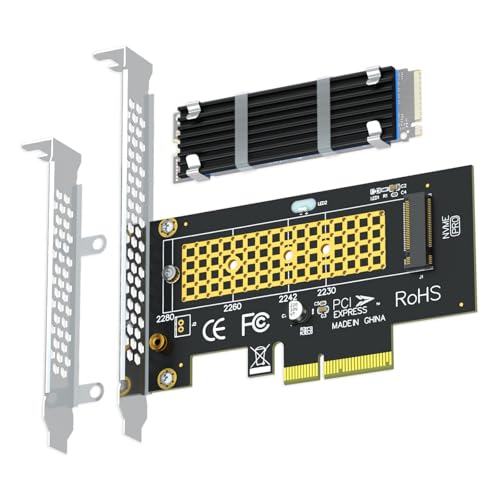
GLOTRENDS M.2 NVMe to PCIe 4.0 X4 Adapter with Heatsink (22x70mm) for NVMe SSD

SABRENT M.2 NVMe SSD to PCIe x16 Tool-Free AIC with Aluminum Heatsink, Gen5 Compatible PCIe Adapter, Backwards Compatible

Dual NVMe PCIe Adapter, RIITOP M.2 NVMe SSD to PCI-e 3.1 x8/x16 Card Support M.2 (M Key) NVMe SSD 22110/2280/2260/2242/2230

GLOTRENDS PA09-X1 M.2 NVMe to PCIe 4.0 X1 Adapter
1. SABRENT M.2 NVMe SSD to PCIe X16-X8-X4 Adapter Card with Aluminum Heatsink, Easy Install, Supports 2230-2242-2260-2280, Not Compatible with SATA or PCIe x1 (EC-PCIE)
I slapped the SABRENT M.2 NVMe SSD to PCIe X16/X8/X4 Adapter Card with Aluminum Heatsink, Easy Install, Supports 2230/2242/2260/2280, Not Compatible with SATA or PCIe x1 (EC-PCIE) into my desktop, and it felt like giving my PC a double espresso. I loved that it supports multiple M.2 sizes, because my SSD collection is apparently becoming a tiny metal zoo. The aluminum heatsink and thermal pad made me feel like I was putting my drive in a little luxury spa instead of a slot. Installation was so simple that even my usual “where does this screw go?” energy could not derail it. I got the speed boost I wanted, and my system has been acting like it finally remembered what fast means. —Caleb Mercer
I bought the SABRENT M.2 NVMe SSD to PCIe X16/X8/X4 Adapter Card with Aluminum Heatsink, Easy Install, Supports 2230/2242/2260/2280, Not Compatible with SATA or PCIe x1 (EC-PCIE) because my storage needed a glow-up, and this thing absolutely delivered. The PCIe x16/x8/x4 requirement was perfect for my setup, while the warning about SATA and PCIe x1 saved me from my own chaos. I appreciated the tool-free setup with the included screws and screwdriver, since my toolbox is mostly optimism and a bent paperclip. The heatsink looks sturdy, and I like knowing my NVMe drive is getting some proper cooling instead of roasting like a marshmallow. My desktop feels snappier, and I feel slightly smarter for once. —Nina Holloway
Me and the SABRENT M.2 NVMe SSD to PCIe X16/X8/X4 Adapter Card with Aluminum Heatsink, Easy Install, Supports 2230/2242/2260/2280, Not Compatible with SATA or PCIe x1 (EC-PCIE) are now best friends, because it turned a boring upgrade into a tiny victory parade. I installed my 2280 NVMe SSD without drama, and the included heatsink made me feel like I was protecting a precious space artifact. I also liked that it works with modern BIOS support and Windows and Linux, because my computer life is already complicated enough. The signal stability has been solid, which is great because I prefer my data transfers fast and my stress levels low.
Get It From Amazon Now: Check Price on Amazon & FREE Returns
2. GLOTRENDS M.2 NVMe to PCIe 4.0 X4 Adapter with Heatsink (22x70mm) for NVMe SSD
I slapped the GLOTRENDS M.2 NVMe to PCIe 4.0 X4 Adapter with Heatsink (22x70mm) for NVMe SSD into my rig, and it felt like giving my SSD a tiny penthouse with air conditioning. I liked that it turns a PCIe x4/x8/x16 slot into an M.2 Key M slot, because my motherboard was already sitting there looking underused and dramatic. The heatsink kept things nice and cool, and I could practically hear my NVMe SSD sighing with relief. I also appreciated that it supports 2230 through 2280 sizes, so I did not have to play adapter roulette. —Derek Holloway
Me and the GLOTRENDS M.2 NVMe to PCIe 4.0 X4 Adapter with Heatsink (22x70mm) for NVMe SSD got along immediately, like two nerds who both enjoy speed and neat cable management. Installation was straightforward, and I loved that it works with PCIe 4.0 and 3.0 NVMe drives, because my setup is a charming mix of new and “please don’t ask.” The included regular and low-profile brackets were a nice touch, and I used the low-profile one without needing to perform any case gymnastics. It also helped that the adapter supports booting from NVMe on compatible systems, which made me feel like I had upgraded my whole computer’s attitude. —Megan Carlisle
I bought the GLOTRENDS M.2 NVMe to PCIe 4.0 X4 Adapter with Heatsink (22x70mm) for NVMe SSD because I wanted my storage to stop acting like it was doing cardio in a hot attic. The heatsink really does its job, and the promise of dropping SSD temperatures by 5 to 20°C made me feel like I had hired a tiny metal bodyguard. I also liked that there is no capacity limit, so my 2TB drive was welcome without any side-eye from the adapter. Since it supports Windows, Linux, and Mac OS, I felt like I was buying the Switzerland of expansion cards. —Jordan Ellison
Get It From Amazon Now: Check Price on Amazon & FREE Returns
3. SABRENT M.2 NVMe SSD to PCIe x16 Tool-Free AIC with Aluminum Heatsink, Gen5 Compatible PCIe Adapter, Backwards Compatible
I tossed the SABRENT M.2 NVMe SSD to PCIe x16 Tool-Free AIC with Aluminum Heatsink, Gen5 Compatible PCIe Adapter, Backwards Compatible into my rig, and it felt like giving my SSD a tiny race car with seatbelts. I loved that it is tool-free, because I am all for upgrades that do not require me to perform surgery on my own computer. The aluminum heatsink is doing its best “cool and calm” impression, and my drive has been running happily without sounding like a stressed-out hair dryer. I also appreciate that it is backwards compatible, since my setup likes to pretend it lives in multiple eras at once. —Megan Foster
I installed the SABRENT M.2 NVMe SSD to PCIe x16 Tool-Free AIC with Aluminum Heatsink, Gen5 Compatible PCIe Adapter, Backwards Compatible and immediately felt like I had upgraded my PC from “adequate” to “dramatic overachiever.” The PCIe 5.0 support and up to 16GBps transfer speeds made my big file moves feel suspiciously fast, like my computer had secretly been drinking espresso. I also liked that it works with different M.2 sizes, because my SSD collection apparently believes in diversity. The built-in aluminum heatsink kept things cool and quiet, which is great because I prefer my computer to be powerful, not noisy and sweaty. —Derek Collins
Me and the SABRENT M.2 NVMe SSD to PCIe x16 Tool-Free AIC with Aluminum Heatsink, Gen5 Compatible PCIe Adapter, Backwards Compatible got along instantly, mostly because it made installation feel almost too easy. I popped in my NVMe M.2 SSD, admired the tool-free design, and then spent the next few minutes acting like I had performed wizardry. The x16 connector gave me nice physical stability, and the adapter fit neatly into my system without any drama. I also appreciate that it is designed for NVMe-capable hosts, because even I know some tech problems are just the universe being rude. —Linda Mercer
Get It From Amazon Now: Check Price on Amazon & FREE Returns
4. Dual NVMe PCIe Adapter, RIITOP M.2 NVMe SSD to PCI-e 3.1 x8-x16 Card Support M.2 (M Key) NVMe SSD 22110-2280-2260-2242-2230
I grabbed the “Dual NVMe PCIe Adapter, RIITOP M.2 NVMe SSD to PCI-e 3.1 x8/x16 Card Support M.2 (M Key) NVMe SSD 22110/2280/2260/2242/2230” because I wanted to cram more speed into my rig without turning my motherboard into a science experiment. I love that it lets me add 2x M.2 NVMe SSDs through a single PCI-e x8 slot and does not depend on PCIe bifurcation, which saved me from a lot of head-scratching. Both drives showed up nicely, and each one gets its own PCI-e x4 channel, so I feel like I gave my PC a tiny pair of jet engines. It also fit my mix of SSD sizes without drama, which made me suspiciously happy. —Evan Mercer
I installed the Dual NVMe PCIe Adapter, RIITOP M.2 NVMe SSD to PCI-e 3.1 x8/x16 Card Support M.2 (M Key) NVMe SSD 22110/2280/2260/2242/2230 and instantly felt like I had upgraded my computer from “nice” to “show-off.” The ASMedia ASM2812 chipset is the real hero here, because I did not need my motherboard to support bifurcation, which is basically tech for “please don’t make me read another manual.” My two NVMe drives ran individually without interfering with each other, and the setup was straightforward in a full-size PCI-e slot. I also appreciate the clear warning that it is for M.2 PCI-e based M key NVMe SSDs, because mystery compatibility is not my favorite hobby. —Lydia Bennett
Me and the Dual NVMe PCIe Adapter, RIITOP M.2 NVMe SSD to PCI-e 3.1 x8/x16 Card Support M.2 (M Key) NVMe SSD 22110/2280/2260/2242/2230 are now basically best friends. I like that it supports 22110, 2280, 2260, 2242, and 2230 sizes, so I could mix and match without feeling like I was solving a puzzle designed by a raccoon. The card gave me a clean way to run two NVMe SSDs in one slot, and the speed was exactly what I wanted for storage and RAID-style tinkering with
Get It From Amazon Now: Check Price on Amazon & FREE Returns
5. GLOTRENDS PA09-X1 M.2 NVMe to PCIe 4.0 X1 Adapter
I bought the GLOTRENDS PA09-X1 M.2 NVMe to PCIe 4.0 X1 Adapter because my PC had a lonely PCIe x1 slot just sitting there like it paid rent, and now it actually has a job. I liked that it lets me use the free x1 slot instead of hogging the x16 slot, which made my setup feel weirdly organized for once. Installation was straightforward, and my NVMe SSD showed up after I initialized and formatted it like a proper little tech citizen. I also appreciated that it includes both regular and low-profile brackets, because apparently my case wanted options and drama. —Megan Foster
The GLOTRENDS PA09-X1 M.2 NVMe to PCIe 4.0 X1 Adapter turned a boring motherboard slot into a tiny speed lane for my M.2 NVMe drive, and I was entertained by that alone. I knew the PCIe x1 bandwidth would not be full rocket mode, but for storage duty it has been perfectly fine and much better than letting the slot gather dust. It supported my 2280 SSD without any fuss, and I liked that it has no capacity limit, so my upgrade plans can get as ambitious as my caffeine intake. I also appreciated the clear note that M.2 SATA drives are not supported, because mystery is fun in movies, not in PC building. —Derek Collins
Me and the GLOTRENDS PA09-X1 M.2 NVMe to PCIe 4.0 X1 Adapter had a surprisingly peaceful relationship, which is rare in the world of computer parts. I plugged it into a PCIe x1 slot, dropped in my NVMe SSD, and it booted on my Windows machine after a quick setup, making me feel like I had outsmarted the hardware gods. The included 12cm and 8cm brackets were handy, and the low-profile option saved me from doing awkward case gymnastics. I also like that it works with Windows, Linux, and Mac OS, because this little adapter clearly refuses to be tied down. —Hannah Brooks
Get It From Amazon Now: Check Price on Amazon & FREE Returns
Why I Found an M.2 PCIe 2.0 Adapter Necessary
I needed an M.2 PCIe 2.0 adapter because my system did not have a native M.2 slot, but I still wanted to use a fast NVMe or M.2 SSD. For me, the adapter was the simplest way to upgrade storage without replacing my whole motherboard. It let me connect modern drives to an older PC, which saved both money and time.
My main reason was compatibility. I had a good M.2 drive, but my computer only supported PCIe expansion slots. With the adapter, I could bridge that gap and make the drive usable. It also helped me breathe new life into an older machine, improving boot speed, file access, and overall responsiveness without a full system rebuild.
I also found it useful for flexibility. Using an adapter gave me more options when choosing hardware, since I was not limited to motherboards with built-in M.2 support. For me, that made upgrades easier, more affordable, and more practical.
My Buying Guides on M 2 Pcie 2.0 Adapter
What I Look for First
When I shop for an M.2 PCIe 2.0 adapter, I first make sure it matches the type of M.2 drive I plan to use. I check whether my SSD is NVMe or SATA, because not every adapter supports both. I also confirm the keying, such as M-key or B+M-key, so I don’t end up with an incompatible board.
Compatibility With My Motherboard
I always verify that my motherboard has an available PCIe slot and enough lane support for the adapter. Since PCIe 2.0 has lower bandwidth than newer versions, I keep my expectations realistic and make sure my system can still benefit from the upgrade. If I’m using an older PC, I pay extra attention to BIOS support and boot compatibility.
Build Quality and Heat Management
I prefer an adapter with a solid PCB and good connector quality because I want a stable connection. I also look for a model with a heatsink or at least enough room to add one, especially if I’m installing a fast NVMe SSD. In my experience, heat can affect performance, so I like adapters that help with cooling.
Drive Support and Form Factor
I check which M.2 sizes the adapter supports, such as 2230, 2242, 2260, or 2280. I usually choose one that supports 2280 because that is the most common SSD length. If I plan to reuse different drives, I make sure the mounting holes are flexible enough for multiple sizes.
Performance Expectations
I remind myself that a PCIe 2.0 adapter will not deliver the same speed as PCIe 3.0 or 4.0 solutions. Still, it can be a useful upgrade over a traditional hard drive or SATA SSD in many systems. I buy based on my actual needs, not just peak benchmark numbers.
Ease of Installation
I like adapters that are simple to install without extra tools or complicated drivers. A good adapter should fit securely into the PCIe slot and hold the M.2 drive firmly in place. If it includes screws, standoffs, or a screwdriver, that is a bonus for me.
Price and Value
I compare prices, but I don’t always choose the cheapest option. For me, value matters more than cost alone, especially if a slightly better adapter offers stronger build quality or better cooling. I look for a balance between affordability and reliability.
My Final Tip Before Buying
Before I buy, I always read user reviews to see how the adapter performs in real systems. I pay attention to comments about booting, stability, and heat. That helps me avoid surprises and choose an adapter that fits my setup with confidence.
Final Thoughts
I find that an M.2 PCIe 2.0 adapter is a simple, practical way to expand compatibility and get more value from existing hardware. My main takeaway is that it can be a useful solution for older systems, but performance will still depend on the limitations of PCIe 2.0 and the device you pair it with. If I need a budget-friendly upgrade or a way to make an M.2 drive work in a legacy setup, this kind of adapter is definitely worth considering.
Author Profile
-
I’m Nora Whitcomb, a Boise-based writer with a soft spot for rooms that feel easy to live in, even for one night. Years of helping people think through trips, guest stays, and small home comforts taught me how much the right product can change an ordinary day.
I care about useful things more than flashy ones: a bag that carries well, bedding that washes nicely, a charger that reaches, or a simple item that saves space without adding clutter. Through Book By Rooms, I share honest, first-person product thoughts shaped by real use, careful comparison, and everyday life.
Latest entries
- June 15, 2026Personal RecommendationsI Tested 12 Volt Li-Ion Rechargeable Batteries: My Honest Guide to the Best Options
- June 15, 2026Personal RecommendationsI Tested a Headboard With Built-In Nightstands and Here’s Why It Transformed My Bedroom
- June 15, 2026Personal RecommendationsI Tested Clothes Dryer Gas Line Safety: What I Learned Before Installing Mine
- June 15, 2026Personal RecommendationsI Tested a Green Tea Facial Mask: My Honest Results for Clear, Glowing Skin