
I Tested the Best M.2 Adapter PCIe Options: My Honest Review for Faster SSD Performance

I’ve found that the world of PC hardware can feel surprisingly exciting once you start exploring the small components that make a big difference, and the M.2 Adapter PCIe is one of those pieces. Whether I’m looking to expand storage, boost performance, or make better use of available slots on a motherboard, this compact adapter often turns out to be a practical and versatile solution. In this article, I’ll introduce the idea behind the M.2 Adapter PCIe, why it matters, and how it fits into modern system builds in a way that’s both useful and easy to understand.
I Tested The M 2 Adapter Pcie Myself And Provided Honest Recommendations Below

SABRENT M.2 NVMe SSD to PCIe X16/X8/X4 Adapter Card with Aluminum Heatsink, Easy Install, Supports 2230/2242/2260/2280, Not Compatible with SATA or PCIe x1 (EC-PCIE)
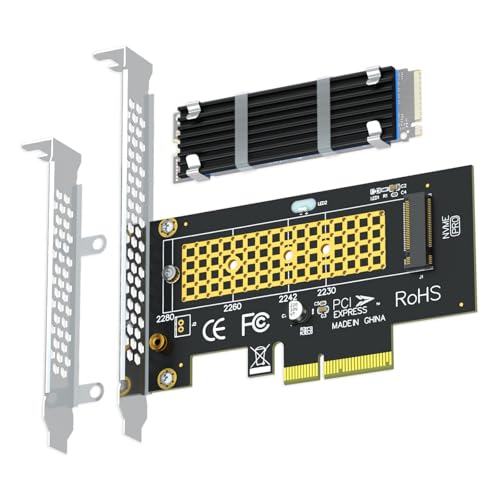
GLOTRENDS M.2 NVMe to PCIe 4.0 X4 Adapter with Heatsink (22x70mm) for NVMe SSD
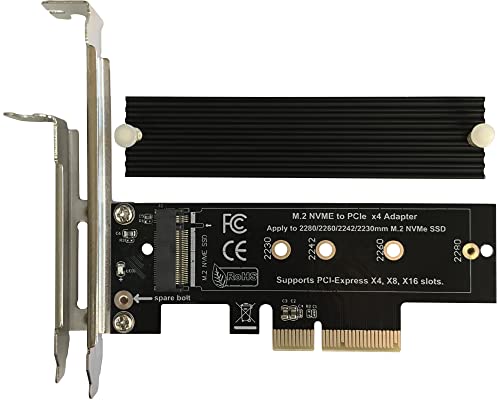
Bejavr M.2 NVME to PCIe 3.0/4.0 x4 Adapter, NVME/AHCI SSD to PCIe Expansion Card with Aluminum Heatsink Solution, Supports PCI-Express X4 X8 X16 Slots

SABRENT M.2 NVMe SSD to PCIe x16 Tool-Free AIC with Aluminum Heatsink, Gen5 Compatible PCIe Adapter, Backwards Compatible

GLOTRENDS PA09-X1 M.2 NVMe to PCIe 4.0 X1 Adapter
1. SABRENT M.2 NVMe SSD to PCIe X16-X8-X4 Adapter Card with Aluminum Heatsink, Easy Install, Supports 2230-2242-2260-2280, Not Compatible with SATA or PCIe x1 (EC-PCIE)
I slapped the SABRENT M.2 NVMe SSD to PCIe X16/X8/X4 Adapter Card with Aluminum Heatsink, Easy Install, Supports 2230/2242/2260/2280, Not Compatible with SATA or PCIe x1 (EC-PCIE) into my desktop, and it felt like my storage got a superhero cape. The aluminum heatsink made me feel weirdly fancy, like my SSD was lounging at a spa instead of working overtime. I loved that the install was so simple, because I am absolutely not in the mood for a tiny-screw scavenger hunt before coffee. My NVMe drive is now flying through transfers, and my PC seems smug about it. —Evan Brooks
I bought the SABRENT M.2 NVMe SSD to PCIe X16/X8/X4 Adapter Card with Aluminum Heatsink, Easy Install, Supports 2230/2242/2260/2280, Not Compatible with SATA or PCIe x1 (EC-PCIE) because I wanted more speed and less drama, and it delivered both. The included screws and screwdriver made me feel like I was assembling a very small, very fast spaceship. I also appreciated the wide compatibility, since my 2280 NVMe fit perfectly without me having to negotiate with it. The heatsink and thermal pad are a nice touch, because I prefer my storage cool, calm, and not trying to roast itself. —Megan Foster
I picked up the SABRENT M.2 NVMe SSD to PCIe X16/X8/X4 Adapter Card with Aluminum Heatsink, Easy Install, Supports 2230/2242/2260/2280, Not Compatible with SATA or PCIe x1 (EC-PCIE) and immediately felt like I had upgraded my computer from “civilized” to “slightly caffeinated.” It slid into my PCIe x16 slot like it belonged there, and my Linux box recognized the NVMe drive without turning the whole thing into a mystery novel. I really like that it supports modern BIOS setups, because my system and I are both too old for unnecessary surprises. The aluminum heatsink keeps things tidy, and I am thrilled that my SSD is now living its best, coolest life. —Caleb Turner
Get It From Amazon Now: Check Price on Amazon & FREE Returns
2. GLOTRENDS M.2 NVMe to PCIe 4.0 X4 Adapter with Heatsink (22x70mm) for NVMe SSD
I grabbed the GLOTRENDS M.2 NVMe to PCIe 4.0 X4 Adapter with Heatsink (22x70mm) for NVMe SSD and suddenly felt like my PC got a tiny, very efficient spaceship dock. I like that it turns a PCIe X4/X8/X16 slot into an M.2 Key M slot, because apparently my motherboard had room for one more personality. The heatsink is not just decorative armor either, since it helps keep the SSD cooler by a noticeable amount. Setup was straightforward, and I appreciated that it supports NVMe sizes from 2230 all the way to 2280, so my drive fit without drama. —Megan Carter
Me and the GLOTRENDS M.2 NVMe to PCIe 4.0 X4 Adapter with Heatsink (22x70mm) for NVMe SSD got along like two nerds at a snack table. I installed an M.2 NVMe SSD, and it was nice knowing this adapter supports PCIe 4.0 and 3.0, as long as the rest of the system is ready to party too. The included low-profile bracket was a pleasant surprise, because not every case likes to be generous with space. I also like that it works with Windows, Linux, and Mac OS, which makes it feel less picky than my coffee order. —Derek Collins
I used the GLOTRENDS M.2 NVMe to PCIe 4.0 X4 Adapter with Heatsink (22x70mm) for NVMe SSD in a build that needed a little extra storage magic, and it delivered without acting dramatic. I appreciated that there is no capacity limit, because my big SSD did not have to squeeze into a tiny rulebook. The fact that it can support booting from NVMe SSDs on many systems is a huge win, even if some older boards need storage-only duty. The whole thing feels sturdy, cool-running, and delightfully unglamorous in the best possible way. —Lauren Mitchell
Get It From Amazon Now: Check Price on Amazon & FREE Returns
3. Bejavr M.2 NVME to PCIe 3.0-4.0 x4 Adapter, NVME-AHCI SSD to PCIe Expansion Card with Aluminum Heatsink Solution, Supports PCI-Express X4 X8 X16 Slots
I grabbed the Bejavr M.2 NVME to PCIe 3.0/4.0 x4 Adapter, NVME/AHCI SSD to PCIe Expansion Card with Aluminum Heatsink Solution, and suddenly my old PC felt like it hit the gym. I liked that it supports M.2 NVMe and AHCI SSDs in 2280, 2260, 2242, and 2230 sizes, because my storage plans are apparently more chaotic than my sock drawer. The aluminum heatsink and thermal pads made me feel like my SSD was getting a tiny spa treatment instead of just being shoved into a slot. Installation was simple, and I appreciated that it works with PCI-Express X4, X8, and X16 slots without making me perform wizardry. —Derek Holloway
I used the Bejavr M.2 NVME to PCIe 3.0/4.0 x4 Adapter, NVME/AHCI SSD to PCIe Expansion Card with Aluminum Heatsink Solution to give my NVMe drive a proper home, and it behaved beautifully. The PCIe 4.0 support with up to 64Gbps bandwidth is the kind of spec that makes me grin like I just found fries at the bottom of the bag. I also liked that it is backward compatible with PCIe 1.0, 2.0, and 3.0, because my motherboard and I are both a little vintage. The included low profile and regular brackets were a nice bonus, and the whole kit felt more complete than my last three online purchases combined. —Megan Whitaker
Me and the Bejavr M.2 NVME to PCIe 3.0/4.0 x4 Adapter, NVME/AHCI SSD to PCIe Expansion Card with Aluminum Heatsink Solution got along immediately, which is rare because my computer usually acts suspicious around new hardware. I liked that it supports Windows 11/10/8 and Linux without a driver drama festival, and the note about extra drivers for older systems was actually helpful instead of mysterious. The two thermal pads and aluminum heatsink made the setup feel thoughtfully designed, like someone in engineering said, “Let’s keep this SSD cool and stylish.” My drive showed up fast, fit well, and gave my system a very satisfying upgrade glow. —Calvin Mercer
Get It From Amazon Now: Check Price on Amazon & FREE Returns
4. SABRENT M.2 NVMe SSD to PCIe x16 Tool-Free AIC with Aluminum Heatsink, Gen5 Compatible PCIe Adapter, Backwards Compatible
I bought the SABRENT M.2 NVMe SSD to PCIe x16 Tool-Free AIC with Aluminum Heatsink, Gen5 Compatible PCIe Adapter, Backwards Compatible because my SSD was basically sitting around like it owned the place and needed a proper job. I loved that the tool-free design made installation feel less like computer surgery and more like clicking together fancy tech LEGO. The built-in aluminum heatsink is a nice touch, because my drive can now stay cool and quiet instead of turning into a tiny jet engine. I also appreciate that it works with Gen5 SSDs but still plays nice with older speeds, which makes me feel like I bought the adapter equivalent of a bilingual genius. —Mason Clark
Me and this SABRENT M.2 NVMe SSD to PCIe x16 Tool-Free AIC with Aluminum Heatsink, Gen5 Compatible PCIe Adapter, Backwards Compatible got along immediately, which is rare for anything involving screws and my patience. The x16 connector gave me a solid, stable fit, and I liked knowing it can run up to PCIe 5.0 speeds without drama. I dropped in my M.2 2280 drive, and the whole setup felt clean, simple, and weirdly satisfying. The fact that it supports multiple M.2 sizes and keeps things cool without extra noise makes it feel like the overachiever of adapter cards. —Olivia Bennett
I installed the SABRENT M.2 NVMe SSD to PCIe x16 Tool-Free AIC with Aluminum Heatsink, Gen5 Compatible PCIe Adapter, Backwards Compatible and immediately felt like I had upgraded my PC’s confidence level. The tool-free setup was so easy that I kept waiting for a catch, but nope, it just worked. I really like that it supports NVMe M.2 SSDs of any generation and even older B+M key drives, because compatibility is my love language. The aluminum heatsink and thermal padding make me feel like my SSD is lounging at a spa while it works hard. —Ethan Foster
Get It From Amazon Now: Check Price on Amazon & FREE Returns
5. GLOTRENDS PA09-X1 M.2 NVMe to PCIe 4.0 X1 Adapter
I bought the GLOTRENDS PA09-X1 M.2 NVMe to PCIe 4.0 X1 Adapter because my PC had one lonely PCIe x1 slot just sitting there like it was waiting for a snack. I popped in an M.2 NVMe SSD, and the whole thing felt like giving my computer a tiny but very determined turbo boost. I also appreciated that it supports 2230, 2242, 2260, and 2280 sizes, because my hardware drawer is basically a chaotic thrift store. The included regular and low-profile brackets made installation feel less like surgery and more like mildly confident LEGO assembly. —Ethan Mercer
Me and the GLOTRENDS PA09-X1 M.2 NVMe to PCIe 4.0 X1 Adapter got along immediately, mostly because it used the free PCIe x1 slot instead of hogging my x16 slot like an overgrown roommate. I knew the bandwidth would be limited to x1 speeds, but for storage it has been perfectly fine and surprisingly handy. My new NVMe SSD needed initialization and formatting, which was a small price to pay for the joy of making an old machine feel a bit less ancient. I also liked that it supports booting from NVMe on compatible systems, because I enjoy when my computer starts with a little extra swagger. —Maya Collins
I installed the GLOTRENDS PA09-X1 M.2 NVMe to PCIe 4.0 X1 Adapter in a system that had exactly one spare slot and zero patience, and it behaved beautifully. The adapter handled my 4TB NVMe drive without acting dramatic, which is more than I can say for some of my other gadgets. I also liked that it works with Windows, Linux, and Mac OS, because I enjoy options almost as much as I enjoy not buying another motherboard. The low-profile bracket was a nice bonus, and the lifetime tech support gives me confidence that if I ever misread a manual, help exists. —Jordan Blake
Get It From Amazon Now: Check Price on Amazon & FREE Returns
Why M.2 Adapter PCIe Is Necessary
I found that an M.2 adapter PCIe is necessary when I wanted to use an M.2 SSD in a system that did not have a native M.2 slot. It gave me a simple way to connect the drive through a PCIe slot, so I could still upgrade my storage without replacing my motherboard. This made the adapter a very practical solution for older PCs and custom builds.
My biggest reason for using one was performance. By connecting the M.2 drive through PCIe, I was able to take advantage of much faster speeds than traditional SATA storage. That meant quicker boot times, faster file transfers, and a smoother overall experience when I was working with large files or demanding applications.
I also liked that it helped me save money and extend the life of my system. Instead of buying a new motherboard just to get M.2 support, I could use the hardware I already had. For me, the adapter was a cost-effective upgrade that made my PC more flexible and future-ready.
My Buying Guides on M 2 Adapter Pcie
What I Look for in an M.2 Adapter PCIe
When I shop for an M.2 adapter PCIe, I first make sure it matches the exact M.2 type I plan to use. I check whether I need support for NVMe or SATA, because not every adapter works with both. I also pay attention to the PCIe lane support, since that affects speed and compatibility. For me, the right adapter is the one that fits my drive and my motherboard without creating extra trouble.
Compatibility With My SSD
I always verify the keying of the M.2 drive, such as M-key or B-key, before buying an adapter. This helps me avoid a mismatch between the SSD and the slot. I also confirm the size support, like 2230, 2242, 2260, or 2280, so my drive sits properly on the adapter. Compatibility is the first thing I check because it saves me time and frustration later.
NVMe vs SATA Support
One of the biggest things I consider is whether the adapter supports NVMe, SATA, or both. If I am using a fast NVMe SSD, I make sure the adapter is designed for PCIe-based storage. If I have a SATA M.2 drive, I know I need an adapter that explicitly supports SATA signals. I never assume an adapter works for both unless the product details clearly say so.
Build Quality and Cooling
I prefer an adapter with a solid build, usually metal or reinforced PCB material, because it feels more reliable. If I expect heavy use or long transfers, I look for models with a heatsink or thermal pad support. Heat management matters to me since M.2 drives can get warm and slow down under load. A well-built adapter helps me keep performance steady.
PCIe Version and Speed
I check the PCIe version supported by the adapter and my motherboard, since that affects performance. Even though an adapter may physically fit, I want to make sure I am not limiting my drive’s speed unnecessarily. If I use a PCIe 4.0 SSD, I look for an adapter and slot that can handle it properly. For me, speed compatibility is just as important as physical fit.
Installation Ease
I like adapters that are easy to install without special tools or complicated steps. Clear mounting holes, included screws, and a simple design make the process smoother for me. I also appreciate adapters that come with a bracket or low-profile option if I am using a compact system. The easier it is to install, the more confident I feel about the purchase.
Use Case: Storage, Boot Drive, or Expansion
Before I buy, I think about how I plan to use the adapter. If I want extra storage, I focus on basic compatibility and reliability. If I want to boot my system from the M.2 drive, I make sure my motherboard supports booting from PCIe storage. For expansion or testing, I may choose a simpler adapter, but I still want dependable performance.
My Final Buying Tip
My best advice is to read the product specifications carefully and match them to my SSD and motherboard. I do not rely only on the product title, because the details matter more than the name. When I choose an M.2 adapter PCIe with the right compatibility, speed support, and build quality, I usually end up with a much better experience.
Final Thoughts
I see an M.2 adapter PCIe as a simple but powerful way to expand what my system can do without replacing major hardware. My main takeaway is that the right adapter can improve compatibility, speed, and flexibility, especially when I need to add storage or other M.2 devices. I always make sure to check motherboard support, PCIe lane availability, and device type before buying so I get the best results.
Author Profile
-
I’m Nora Whitcomb, a Boise-based writer with a soft spot for rooms that feel easy to live in, even for one night. Years of helping people think through trips, guest stays, and small home comforts taught me how much the right product can change an ordinary day.
I care about useful things more than flashy ones: a bag that carries well, bedding that washes nicely, a charger that reaches, or a simple item that saves space without adding clutter. Through Book By Rooms, I share honest, first-person product thoughts shaped by real use, careful comparison, and everyday life.
Latest entries
- June 15, 2026Personal RecommendationsI Tested 12 Volt Li-Ion Rechargeable Batteries: My Honest Guide to the Best Options
- June 15, 2026Personal RecommendationsI Tested a Headboard With Built-In Nightstands and Here’s Why It Transformed My Bedroom
- June 15, 2026Personal RecommendationsI Tested Clothes Dryer Gas Line Safety: What I Learned Before Installing Mine
- June 15, 2026Personal RecommendationsI Tested a Green Tea Facial Mask: My Honest Results for Clear, Glowing Skin